Nan McCarthy

author of Since You Went Away, Chat, Connect, Crash, & Live ’Til I Die

  • Home
  • About
  • Titles
    • Since You Went Away, Part Three: Summer
    • Since You Went Away, Part Two: Spring
    • Since You Went Away, Part One: Winter
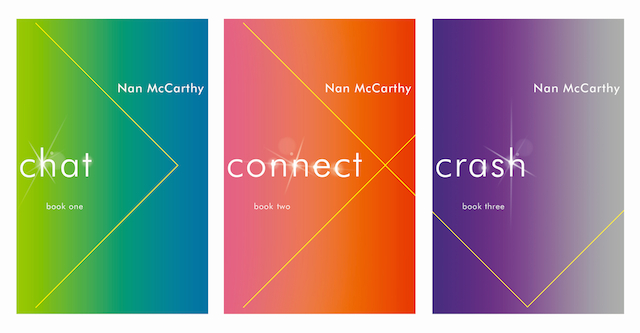
    • Chat: book one
    • Connect: book two
    • Crash: book three
    • Coming Soon
    • Live ’Til I Die
    • Chat (1998 edition)
    • Connect (1998 edition)
    • Crash (1998 edition)
    • Quark Design
  • Excerpts
    • Live ’Til I Die: excerpt
  • Blog
  • News
  • Events
  • Shop
    • Buy: Since You Went Away (Part Three: Summer)
    • Buy: Since You Went Away (Part Two: Spring)
    • Buy: Since You Went Away (Part One: Winter)
    • Buy: Chat (book 1)
    • Buy: Connect (book 2)
    • Buy: Crash (book 3)
    • Buy: Live ’Til I Die
  • Contact
  • Amazon
  • iTunes
  • Facebook
  • Twitter

Posts By Nan McCarthy

0 Looking for a way to honor veterans & celebrate the Marine Corps Birthday?

  • November 6, 2020
  • by Nan McCarthy
  • · Blog · Family · Military life

Since You Went Away: Part One now 25% off (print) & 50% off (ebook)

Honor our veterans and celebrate the Marine Corps Birthday this year by immersing yourself in the story of a modern-day military family. While most war stories focus on the drama on the battlefield, Since You Went Away shines a light on the battles being fought on the homefront. Suspenseful and surprisingly funny, Nan McCarthy creates a world that’s eminently relatable to readers both inside and outside the military.

From now until midnight November 11th, you can purchase Part One of the Since You Went Away series (print) for only $5.95 (normally $7.95 on Amazon & $14.95 in bookstores). Or download the ebook version on Amazon for only $1.99 (normally $3.99).

Set against the backdrop of the Iraq war in the year 2008, Since You Went Away lifts the curtain on the most challenging and emotional period in the life of a military family: deployment. Featuring jaw-dropping plot twists and a deeply human cast of characters, readers will find themselves immediately drawn into the realistic yet entertaining orbit of the Mahoney family, turning pages late into the night.

This offer is available exclusively on Amazon, through midnight November 11th only. Instead of thanking a veteran on Veterans Day, give yourself a chance to view the world through their eyes—and through the eyes of their families back home, who keep watch and wait.

Click here to order the paperback.

Click here to order the ebook.

about the author:

Nan McCarthy is the author of the Since You Went Away series, Chat, Connect, & Crash, Live ‘Til I Die, and Quark Design. A former magazine editor & tech journalist, Nan founded Rainwater Press in 1992 and began selling her books online in 1995. Nan and her husband, a veteran who served 29 years in the Marine Corps, are the proud parents of two adult sons. Nan wrote Since You Went Away after taking a ten-year break from full-time writing to care for the family during her husband’s frequent military travels.

Cover design by David High.
Cover art by Larry Jacobsen.

Since You Went Away, Part One: Winter
Nan McCarthy
(Rainwater Press, 2017) 172 pages
F I C T I O N
Part Two: Spring and Part Three: Summer now available. Part Four: Fall available later this month!

Enter your email address to subscribe to this blog and receive notifications of new posts by email.

  • Tweet
  • Click to email a link to a friend (Opens in new window) Email
  • Share on Tumblr
  • Click to share on Reddit (Opens in new window) Reddit
Like Loading...

3 You don’t have to believe the Atlantic article to know Trump doesn’t respect our military

  • September 4, 2020
  • by Nan McCarthy
  • · Blog · Military life · Politics

I’m the spouse of a vet who served 29 years in the Marine Corps. So when Donald Trump began publicly insulting service members and veterans early on in his presidential campaign, I took notice.

Nan McCarthy

A lot of people are saying that since Jeffrey Goldberg’s recent Atlantic article quotes anonymous sources (Trump: Americans who died in war are “losers” and “suckers,” Sept. 3, 2020), the entire article is “fake news.” I happen to disagree, but let’s pretend for a moment that Goldberg’s extremely credible piece of journalism is unverifiable. (Journalism 101: Just because an article quotes anonymous sources doesn’t mean the journalist doesn’t know who those sources are. In fact, quoting sources who wish to remain anonymous involves an even more exhaustive vetting process than if the sources had allowed themselves to be named.) 

So for the sake of argument, let’s consider only the things Trump has said publicly about the military — on the radio, on television, and on his own Twitter feed. Certainly you wouldn’t call the videotape of Trump saying John McCain “isn’t a war hero” because “he was captured” fake news, right? Just roll the tape from the 2015 Family Leadership Summit in Ames, Iowa where Trump appeared when he was a presidential candidate. He also calls John McCain a “loser” earlier in that same tape, and a few days later (July 18, 2015 at 4:45 p.m.), Trump retweeted an article about the event with the headline “Donald Trump: John McCain is ‘A Loser.’” Whether or not you agree with John McCain’s politics, he served in the military 23 years and was a prisoner of war for six of those years. To say he is a “loser” and “not a war hero” shows a heartless disrespect for the thousands of surviving POWs still living among us, as well as the tens of thousands of American service members who remain unaccounted for.

I am the spouse of a veteran who served 29 years in the Marine Corps. So when Donald Trump began publicly insulting service members and veterans early on in his presidential campaign, I took notice. (It’s worth noting I’d been a registered Republican for 34 years until that point.) After Khizr and Ghazala Khan spoke at the Democratic National Convention on July 28, 2016, Trump belittled them in an interview with George Stephanopoulos of ABC News, speculating that Mrs. Khan was not “allowed” to speak. (“If you look at his wife, she was standing there, she had nothing to say, she probably — maybe she wasn’t allowed to have anything to say, you tell me.”) Mr. and Mrs. Khan are Gold Star parents. Their 27-year old son, U.S. Army Capt. Humayun Khan, was killed in Baqubah, Iraq in 2004. In that same interview with Stephanopoulos, Trump likened the Khan’s sacrifice of losing a son in the war to his own experience running a business: “I think I’ve made a lot of sacrifices. I’ve worked very, very hard. I’ve created thousands and thousands of jobs.” These are things Trump said on film. No anonymous sources. Words that undeniably came out of Trump’s mouth. By disrespecting one Gold Star family, he disrespected all Gold Star families, along with the memories of hundreds of thousands of service members who gave all.

In two separate radio interviews with Howard Stern in the 1990s, Trump compared his sexual exploits to serving in Vietnam. In 1993, while discussing the dating scene with Stern, Trump likened his efforts to avoid sexually transmitted diseases to being a soldier: “Dating is like being in Vietnam. You’re the equivalent of a soldier going over to Vietnam.” He did so again in 1997: “It is a dangerous world out there — it’s scary, like Vietnam. Sort of like the Vietnam era. It is my personal Vietnam. I feel like a great and very brave soldier.” Listen to the audio. That is Trump talking. Comparing dating and having sex with serving in Vietnam. Then ask a Vietnam veteran if their time in Vietnam was like dating. Or better yet—ask the mother, father, brother, sister, child, or spouse of someone who died in Vietnam if they would say their loved one’s efforts to avoid getting blown to bits by not stepping on a land mine in the jungles of Vietnam is like trying to avoid getting an STD in the New York City dating scene.

Then there are the lies about Veterans Choice. The Veterans Choice Act, which allows veterans to seek care outside of the VA health system, was written by John McCain and Bernie Sanders and signed into law by President Obama in 2014. By some estimates, Trump has lied about and attempted to take credit for Veterans Choice more than a hundred times. During a rally appearance in June 2019, Trump is filmed saying “They’ve been trying to get that [Veterans Choice] passed for 44 years.” On August 8, 2020 Trump was filmed at his Bedminster, NJ golf club saying, “We passed Choice as you know, Veterans Choice. They’ve been trying to get that passed for decades and decades and decades and no president’s ever been able to do it. And we got it done. So veterans have choice.” At another filmed appearance Trump says, “The vets — the VA was in horrible shape. Now, they have choice. And nobody could get choice. John McCain couldn’t get it. Nobody could get it. They tried for years. They couldn’t get it. I got choice for the vets.” What’s interesting is that Trump could easily — and honestly — claim credit for extending and expanding Veterans Choice when he signed the Mission Act in 2018. But instead he chooses to continue insulting veterans and the people who care for them by blatantly lying about his role in Veterans Choice. Again, these are words Trump has been filmed saying in public, in front of an audience. No anonymous sources. Watch the tapes.

In a tweet dated October 12, 2019 referring to Green Beret Maj. Mathew Golsteyn who was charged with war crimes, Trump described service members as “killing machines”: “We train our boys to be killing machines, then prosecute them when they kill.” This shows a complete lack of understanding of the American military, how it works, and what it stands for. (Trump also ended up pardoning two other convicted war criminals in addition to Golsteyn.) This lack of understanding on the part of the president, the Commander in Chief of our armed forces, further demonstrates a lack of respect for our service members by Trump’s failure to educate himself on something as basic as the Military Code of Conduct. No anonymous source here. The tweet is there for all to see in Trump’s Twitter feed.

There are so many other instances in which Trump has insulted our military on the record, in his own words, whether it be via television, radio, or tweet. That time he accused troops in Iraq of stealing money meant for Iraqis (“I want to know who were the soldiers that had that job, because I think they’re living very well right now, whoever they may be.”) Or that time he called Gen. James Mattis, a beloved Marine Corps general, “the world’s most overrated general.” Or that time he said “I don’t care what the military says” during a Fox News interview about renaming Army bases. Or how about when Trump said he “knows more about ISIS than the generals do.” Or when he described service members suffering from PTSD as “weak” and said “they can’t handle it.”

Go ahead, don’t believe Jeffrey Goldberg’s article in The Atlantic because, as you say, it quotes anonymous sources. But tell me, how do you discredit the audio recordings, the videotapes, the tweets coming directly from Donald Trump? If you didn’t already know before The Atlantic article came out that Trump doesn’t care about our military, you haven’t been paying attention.


Nan McCarthy is the author of the Since You Went Away series, the Chat, Connect, Crash series, and the memoir Live ’Til I Die. A former magazine editor and tech writer, Nan founded Rainwater Press in 1992 and began selling her books online in 1995. She started writing the Since You Went Away series in 2012, after taking a ten-year break from full-time writing to care for the family during her husband’s frequent military travels. Nan and her husband, a veteran who served 29 years in the Marine Corps, are the proud parents of two adult sons.


Enter your email address to subscribe to this blog and receive notifications of new posts by email.

  • Tweet
  • Click to email a link to a friend (Opens in new window) Email
  • Share on Tumblr
  • Click to share on Reddit (Opens in new window) Reddit
Like Loading...

0 New print editions celebrate the 25th anniversary of Chat

  • March 13, 2020
  • by Nan McCarthy
  • · Blog · Books · Chat: book one · Connect: book two · Crash: book three · fiction · Publishing · self-publishing · Writing
It’s been 25 years since I published the first edition of Chat in 1995. What better way to celebrate than by releasing print versions of the latest editions of Chat, Connect, & Crash?
Nan McCarthy

You might remember that, after I self-published Chat in 1995 and Connect in 1996, Simon & Schuster bought the rights to the trilogy and published it in trade paperback in 1998. (For a more detailed timeline of the series click here.) The books had a good run, and in 2012 I finally regained the rights to the series. In 2014 I released completely new editions of the books in ebook format, featuring the original, never-before-published ending to Crash.

Although I’d been publishing under the Rainwater Press imprint since the 1990s, things had changed a lot in the publishing industry when I decided to re-publish the trilogy in 2014. I was fairly well up to speed on print production but I’d never before published my own ebooks (which S&S had taken care of for me in 1999). The learning curve was high but if you know me you know how I love a challenge.

With the help of cover designer David High and ebook production wiz Kevin Callahan, the revamped editions of Chat, Connect, & Crash were released as ebooks in the spring of 2014. By that time I was two years into working on a new project (Since You Went Away) and eager to get back to it.

I told myself I’d worry about the print versions of Chat, Connect, & Crash later. Meanwhile I continued working on Since You Went Away, and what I thought was going to be one book turned out to be four (with Part Four coming out later this year). Having put my toe back in the publishing waters, in the last three years I’ve been able to simultaneously release each of the books in the Since You Went Away series in both ebook and print formats.

Now here we are, six years later, and I’ve finally had a chance to tear myself away from finishing Since You Went Away long enough to focus on releasing the print versions of Chat, Connect, & Crash (once again with the help of David and Kevin). Hard to believe it’s been 25 years since I first self-published that little black book called Chat. Sometimes—if you’re patient enough—things have a way of falling into place.


The 2014 editions of Chat, Connect, & Crash now available in print.


 Click here to purchase the print editions on Amazon: Chat, Connect, & Crash.


The Chat, Connect, Crash series is now available from bookstores, libraries, & other retailers via Ingram distribution. Ask for the book by name at your local bookseller or library.


Enter your email address to subscribe to this blog and receive notifications of new posts by email.

  • Tweet
  • Click to email a link to a friend (Opens in new window) Email
  • Share on Tumblr
  • Click to share on Reddit (Opens in new window) Reddit
Like Loading...

2 I’m not a fan of surprise military reunion videos and here’s why

  • February 6, 2020
  • by Nan McCarthy
  • · Blog · Family · Military life
As the spouse of a vet who served 29 years in the Marine Corps, I’m not a fan of surprise deployment reunions, and I’m especially not a fan of surprise reunions that are filmed for public consumption.
Nan McCarthy

A lot of great conversations are happening on social media right now as a result of the surprise reunion at Tuesday night’s State of the Union address. Military spouses are speaking out on Facebook and Twitter and blog posts about their personal experiences with deployment reunions, which can be awkward and uncomfortable and stressful even when they’re not a surprise and / or being filmed on national TV. Just this morning The Washington Post published an article by Alex Horton on this very topic, quoting military spouse Rebekah Sanderlin, whose funny, sad, intimate, and powerful tweets on military reunions have so far received thousands of likes and hundreds of retweets.

As the spouse of a vet who served 29 years in the Marine Corps, and as a writer who’s been closely following issues related to military family life for more than a decade now, I’m happy to see this conversation taking place and gaining traction among the general public. And while I’m not a fan of surprise deployment reunions—and I’m especially not a fan of surprise reunions that are filmed for public consumption—I see only good things coming from the current conversation that’s happening as result of a nationally televised military reunion viewed by millions of Americans. It’s an excellent opportunity to draw the curtain and invite non-military families to learn more about what it’s like to love someone who happens to be in the military.

Surprise reunions are hard on military kids, especially younger ones. During a deployment, according to another Washington Post article by Tara Swords, military kids live in a constant state of heightened anxiety and experience a higher rate of emotional problems compared to their friends from non-military families. Explains child psychologist and retired Army general Stephen Xenakis (as quoted in the above WP article), even if their deployed parent is serving at a relatively safe forward operating base—in a non-combat-capacity—that distinction is difficult for younger kids to grasp. They do grasp that something terrible could happen to their deployed parent. Surprising already anxious kids in front of television cameras—even for a positive moment such as a reunion—only adds to their anxiety.

Surprise reunion videos sugarcoat and romanticize military life. They give the false impression that life magically returns to normal the moment the service member comes home. Yes, reunions are incredibly joyful, but they are also incredibly stressful, even for the adults.

While many veterans and military families adjust pretty well after a deployment, the reality for the military population at large is often darker and scarier than most people realize. Even I was caught off guard by the months-long struggles that ensued after my husband’s last deployment to Iraq in 2008, and he’d been in the military 26 years at that point.

Reunion videos gloss over the fact that once a deployed service member returns, in many cases their challenges are only just beginning. Deployments change people—both the service members and their families. Sometimes these changes are positive, but oftentimes they are not. Military families face higher divorce rates. Many veterans encounter unemployment, homelessness, and mental health issues including suicide (not to mention other serious health challenges as a result of physical injuries, including lost limbs and traumatic brain injury).

I don’t judge military families who like surprise reunions. I don’t judge people who like surprise reunion videos—they make me cry too. I would like to see more education and support for military families and veterans—not only during deployments & homecomings, but after the dust has settled, when service members and the people who love them are struggling to put their lives back together. If you’re interested in learning more about how to support veterans and military families, here are just a few of my favorite charitable organizations with military-related missions: Blue Star Families, Team Rubicon, Semper Fi Fund, Heart of America Stand-down.

On a final note, as Horton makes clear in his Washington Post article, let’s remember and honor the Gold Star Families who’d give anything to see their service member come home, no matter the circumstances.


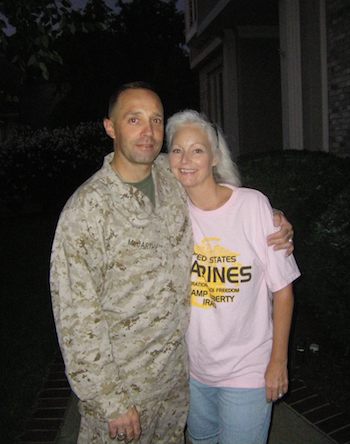
(These photos were taken in 2008 at the end of my husband’s 2-week leave, midway through his 13-month deployment to Iraq. We were standing in front of our house at zero dark-thirty getting ready to make the dreaded trip back to the airport)


Enter your email address to subscribe to this blog and receive notifications of new posts by email.

  • Tweet
  • Click to email a link to a friend (Opens in new window) Email
  • Share on Tumblr
  • Click to share on Reddit (Opens in new window) Reddit
Like Loading...

1 Buy: Since You Went Away (Part Three: Summer)

  • September 24, 2019
  • by Nan McCarthy
  • · Books · fiction · Shop · Since You Went Away (Part Three: Summer)


Since You Went Away, Part Three: Summer by Nan McCarthy (Rainwater Press, 2019) is now available from these booksellers:


Click on this link to order the paperback.


amazon logo.120x35 (small)Download_Chat_on_iBooks_Badge_US-UK_110x40_090513

nook logo.100x44(small)

small kobo logo cropped

Click one of these to order the ebook.


New!The Since You Went Awayseries is now available from bookstores, libraries, & other retailers via Ingram distribution. Ask for the book by name at your local bookseller or library.


Follow this blog to be the first to receive updates about new books in the series.

Enter your email address to subscribe to this blog and receive notifications of new posts by email.

  • Tweet
  • Click to email a link to a friend (Opens in new window) Email
  • Share on Tumblr
  • Click to share on Reddit (Opens in new window) Reddit
Like Loading...

0 Buy: Since You Went Away (Part Two: Spring)

  • September 24, 2019
  • by Nan McCarthy
  • · Books · fiction · Shop · Since You Went Away (Part Two: Spring)


Since You Went Away, Part Two: Spring by Nan McCarthy (Rainwater Press, 2017) is now available from these online booksellers:


amazon logo.120x35 (small)

Download_Chat_on_iBooks_Badge_US-UK_110x40_090513

nook logo.100x44(small)

small kobo logo cropped

Click one of these to order the ebook.


Click CreateSpace to order the paperback.


Follow this blog to be the first to receive updates about new books in the series.

Enter your email address to subscribe to this blog and receive notifications of new posts by email.

  • Tweet
  • Click to email a link to a friend (Opens in new window) Email
  • Share on Tumblr
  • Click to share on Reddit (Opens in new window) Reddit
Like Loading...

0 Since You Went Away, Part Three: Summer

  • September 24, 2019
  • by Nan McCarthy
  • · Books · Family · fiction · Military life · Since You Went Away (Part Three: Summer) · Titles

Since You Went Away, Part Three: Summer
Nan McCarthy
(Rainwater Press, 2019) 216 pages
F I C T I O N

School’s out but the Mahoney family’s summer is anything but lazy. As they inch closer to the halfway point of Liam’s year-long deployment to Iraq, tensions heighten each time he goes outside the wire, challenging Emilie’s ability to keep it together. Meanwhile Finn and Rory find themselves in some unorthodox situations, providing comic relief for the makeshift family Emilie has assembled in Liam’s absence.

Wade and Isabel’s marriage is on the rocks again, even as Wade makes strides toward personal recovery with the help of the VA and a strong support network. Aunt Dottie’s boyfriend Joey struggles with retirement as his memories of the Vietnam War and a troubled past resurface. Danger closes in on Fakhir’s family in Baghdad as they anxiously await their visas. Unexpected events prompt Fakhir to confide in Emilie, revealing his secrets one morsel at a time. And when it comes to secrets, Agnes shares some whoppers that blow everyone’s preconceptions to pieces.

Propelled by a plot that accelerates with each turn of the page, Since You Went Away portrays in intimate detail the effects of a distant war on the families and returning veterans at home. At once poignant and darkly funny, it is a fly-on-the-wall account of the innermost workings of a military family—their fears and hopes, their struggles and disappointments, their unexpected moments of joy and comfort and laughter.

This is Part Three of a novel released in four parts.

C O M I N G  S O O N:  Part Four: Fall.


about the author:

Nan McCarthy is the author of the Since You Went Away series, Chat, Connect, & Crash, Live ‘Til I Die, and Quark Design. The Chat, Connect & Crash series, originally self-published, was acquired by Simon & Schuster and published in trade paperback in 1998. Nan regained the rights to the series and released new editions in 2014. A former magazine editor & technology writer, Nan founded Rainwater Press in 1992 and began selling her books online in 1995. Nan and her husband, a veteran who served 29 years in the Marine Corps, are the proud parents of two adult sons. Nan wrote Since You Went Away after taking a ten-year break from full-time writing to care for the family during her husband’s frequent military travels.

Cover design by David J. High, High Design.
Cover art by GreyLilac (lily pads & flower) + JBOY (dragonflies) / Shutterstock.


Click on this link to order the paperback.


amazon logo.120x35 (small)Download_Chat_on_iBooks_Badge_US-UK_110x40_090513

nook logo.100x44(small)

small kobo logo cropped

Click one of these to order the ebook.


New! The Since You Went Away series is now available from bookstores, libraries, & other retailers via Ingram distribution. Ask for the book by name at your local bookseller or library.


Enter your email address to subscribe to this blog and receive notifications of new posts by email.

  • Tweet
  • Click to email a link to a friend (Opens in new window) Email
  • Share on Tumblr
  • Click to share on Reddit (Opens in new window) Reddit
Like Loading...

1 Since You Went Away, Part Two: Spring

  • October 28, 2017
  • by Nan McCarthy
  • · Books · Family · fiction · Military life · Since You Went Away (Part Two: Spring) · Titles

Since You Went Away, Part Two: Spring
Nan McCarthy
(Rainwater Press, 2017) 226 pages
F I C T I O N

The story continues as winter turns to spring and the Mahoney family faces situations at once heartbreaking and heartwarming. Not yet halfway through Liam’s year-long deployment, Emilie keeps a close eye on news from the Middle East as she attempts to maintain a sense of normalcy for everyone around her. She tries—but doesn’t always succeed—to be both mother and father to Finn and Rory, who must deal with the usual pressures of high school while worrying about their dad’s safety in a war zone.

Meanwhile, Fakhir becomes part of the family, providing comic relief with his language mishaps but still unable to open up about the past he left behind in Baghdad. The family welcomes Lucia into the fold, a would-be high-school dropout whose saucy exterior belies a new-found determination to do whatever it takes to keep her life on track.

Wade carries on the fight to save his marriage to Isabel, all while battling his personal demons and navigating a system ill-prepared to care for its veterans. The quirky and vivacious Aunt Dottie enters the scene with her leisure-suit-wearing boyfriend Joey, a Vietnam veteran devoted to Dottie and her tyrannical Jack Russell Terrier, Jacques.

Set against the backdrop of the Iraq war in the year 2008, Since You Went Away portrays in intimate detail the effects of a distant war on the families and returning veterans at home. With an undercurrent of suspense, it is a fly-on-the-wall account of the innermost workings of a military family—their fears and hopes, their struggles and disappointments, their unexpected moments of joy and comfort and laughter.

This is Part Two of a novel that will be released in four parts.

C O M I N G  S O O N:  Part Three: Summer.


about the author:

Nan McCarthy is the author of Since You Went Away, Chat, Connect, & Crash, Live ‘Til I Die, and Quark Design. The Chat, Connect & Crash series, originally self-published, was acquired by Simon & Schuster and published in trade paperback in 1998. Nan regained the rights to the series and released new editions in 2014. A former magazine editor & technology writer, Nan founded Rainwater Press in 1992 and began selling her books online in 1995. Nan and her husband, a veteran who served 29 years in the Marine Corps, are the proud parents of two adult sons. Nan wrote Since You Went Away after taking a ten-year break from full-time writing to care for the family during her husband’s frequent military travels.

Cover design by David High.
Cover art by Jut.


Click CreateSpace to order the paperback.


amazon logo.120x35 (small)Download_Chat_on_iBooks_Badge_US-UK_110x40_090513

nook logo.100x44(small)

small kobo logo cropped

Click one of these to order the ebook.

Enter your email address to subscribe to this blog and receive notifications of new posts by email.

  • Tweet
  • Click to email a link to a friend (Opens in new window) Email
  • Share on Tumblr
  • Click to share on Reddit (Opens in new window) Reddit
Like Loading...

1 Student Interview: Writing & the Writing Life

  • June 25, 2017
  • by Nan McCarthy
  • · Blog · Books · Interviews · Publishing · self-publishing · students/academic · Writing

Occasionally I receive inquiries from students who’ve been assigned the unfortunate task of writing a paper about one of my books and/or my life as a writer. I love chatting with students and I always make an attempt to answer student emails when time allows. Here’s an interview (updated & edited for length) with a college student who was tasked with writing a profile of someone in the arts & entertainment industry. She asked some great questions!

Nan McCarthy

Student: When was it, exactly, that you realized writing might be a career path you wanted to take, and why?

Nan: I learned to read when I was 4 and I loved the escape that books offered me. I was extremely introverted as a child and I also had a difficult family life due to my father’s alcoholism (he died of alcoholic cirrhosis when he was 39 and I was 9). I spent a lot of time alone in my room and writing was a natural extension of my love of reading. Being that I was shy, writing felt like a safe way to express myself and I enjoyed it a lot.

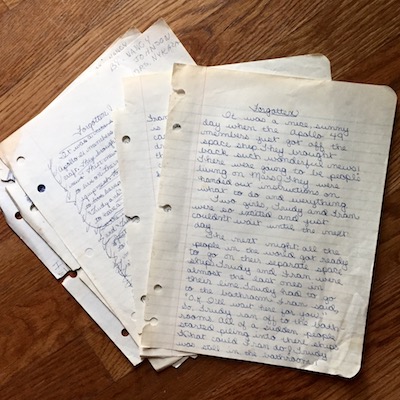
I attempted to write my first novel in 4th or 5th grade. It’s a futuristic story called “Forgotten,” about two friends who get left behind on Earth while everyone else on the planet has moved to Mars. (This was in the early ’70s, not long after Apollo 13, which no doubt ignited the imaginations of schoolkids everywhere.) It ended up being only a few pages, but I still have the handwritten story and the rough draft.

After that I started writing poetry and continued writing poetry through college. I still have all the poems I wrote. Most of them are very bad. (Though I did get a couple of poems published in The Daily Illini when I was in college, which is when I also received my first fan letter—which I also still have.)

In high school I was the editor of the yearbook and had a column in the school paper. I knew I wanted to be a writer but I was concerned about being independent and making enough money to live on my own (i.e., not with my mom & step-dad) after college. That’s why I chose to major in Advertising (at University of Illinois, Urbana-Champaign). I felt Advertising was a solid career where I could use my creativity while also making enough money to be self-supporting. During my college summers I worked at Leo Burnett Advertising in Chicago (two summers) and at a smaller ad agency (also in Chicago) called G.M. Feldman & Co. (one summer).

Student: How did you get started?

Nan: My plan was to work at an ad agency in Chicago after graduation. Instead I got married three weeks after graduating (because love), and my husband (Pat, a lieutenant in the Marine Corps at the time) got orders to Okinawa, Japan for three years. It turned out to be a great experience for both of us, and I got my first job in publishing in Japan, where I was the editor of a weekly magazine called This Week on Okinawa.

After we returned from Japan I wrote my first novel, a fictionalized version of two Americans living in Okinawa called Knowing the Sky. This was in 1986-1987; I wrote it using an electric typewriter. The completed manuscript was a whopping 650 pages. Like my teenage poetry, my first attempt at a novel was also quite bad. (Resulting in a box full of rejection letters which currently reside in our basement.)

I went back to work in the magazine business where I was the managing editor of a computer magazine called Personal Publishing. This led to my freelance career as a tech journalist and eventually to my first published book, a four-color guide for graphic designers on how to use desktop publishing software (Quark Design: A Visual Guide to QuarkXPress). My career as a tech writer in the late ’80s and early ’90s turned out to be financially lucrative but it also had a high burnout rate. Even back then, the technology was developing so fast that the tech writers in the industry were expected to constantly churn out new stuff.

In 1995 I decided to take another stab at writing a novel, which is when I wrote the email epistolary novel Chat. (See my bio below for the rest of that story.)

Student: What would be a (short) self-written biography of yourself and your writing career?

Nan: Nan McCarthy is the author of Since You Went Away, Chat, Connect, & Crash, Live ‘Til I Die, and Quark Design. The originally self-published Chat, Connect & Crash series was released in trade paperback by Simon & Schuster in 1998 and widely translated. Nan later regained the rights to the series, publishing new, updated editions in 2014. A former magazine editor & tech writer, Nan founded Rainwater Press in 1992 and began selling her books online in 1995. Nan and her husband, a veteran who served 29 years in the Marine Corps, are the proud parents of two adult sons. Nan wrote Since You Went Away after taking a ten-year break from full-time writing to care for the family during her husband’s frequent military travels.

That’s my professional bio. On a more personal level I guess I’d say I’m a mom, vet spouse, writer, sister, friend. I love my family and I’m still close with my three best friends from high school. I love reading, nature walks, our rescue dogs & cats, and classic movies.

Student: Can you describe your ideal working conditions?

Nan: A few years ago when I started working on Since You Went Away I moved my writing area from the basement office (which had no windows) to a little corner of our bedroom where there’s a big window. I discovered I need daylight to keep my spirits up while I’m working. My best writing time is during the day, what would be regular business hours for most people. I stick to a regular writing schedule—generally Monday through Friday, from about 7 a.m. until 6 p.m. or later. Depending on where I’m at in the writing process, I’ll write on Saturday and Sunday too if I can. If my husband is traveling out of town I’ll write later into the night. I write best when the house is empty and completely quiet.

Student: How would you describe your tone in writing?

Nan: I don’t set out to write with a certain tone in mind. I’m mostly concerned with telling the story. I work hard at making myself invisible to the reader so they can get lost in the story and experience what the characters are experiencing without being distracted by the writing itself. I appreciate beautiful writing in others but I like to get out of my own way. I’m a strong believer in using language as efficiently as possible. Whenever I can, I’ll choose the shorter, simpler, more precise word over a longer word. One thing I do concern myself with is rhythm. I read aloud everything I write and if I stumble over something, I keep rewriting until it sounds completely natural.

Working as a computer journalist has had a huge impact on my writing style. In tech writing, even the smallest detail such as a punctuation mark has to be precisely accurate. The way you structure a sentence has to be specifically engineered to help the reader understand and grasp incredibly complex concepts in the shortest amount of time. The language has to be straightforward and not the least bit confusing. I like to think of myself as a “word engineer.” People tend to think of writers as messy and haphazard individuals because we’re creative. But good writing involves logic, attention to detail, and problem-solving abilities, much more so than most people realize.

That said, I do love writing dialogue, which is why I love writing epistolary novels. Emails are a unique form of conversation, a hybrid of talking and writing. My latest novel (Since You Went Away) contains lots of dialogue in the form of recounted conversations within the emails themselves. In real life I love listening to people talk, paying close attention to the rhythm of people’s voices, the idiomatic expressions they use, and each person’s body language while having a conversation. I tend to be a boring dinner companion in restaurants because I often prefer eavesdropping on other diners’ conversations rather than talking to my husband (but he’s used to that by now).

Student: What has been your most successful publication and why?

Nan: Chat, Connect, and Crash are probably my most commercially successful books so far (not counting Since You Went Away which is currently being released in four parts). But I’d have to say, as far as my completed works, the book I’m most proud of is Live ’Til I Die: a memoir of my father’s life, which I self-published in 2002. It was a very personal project obviously, but I’m proud of the quality of the writing in that book as well as the research I did in interviewing my dad’s childhood friends, our remaining family members, and medical professionals who treat people with addictions. I feel good about the positive nature of the book, its sense of hopefulness in spite of the tragedy of a young man like my dad losing his battle with alcohol. Most addiction memoirs are success stories as told by the person who overcame their addiction, so Live ’Til I Die is unique in that way because my dad didn’t survive to tell his story. But even with its incredibly sad outcome, I was able to shine a light on the destruction of addiction while at the same time highlighting the positive aspects of my father’s character, showing his humanity and the lasting impact he left on the lives of the people who loved him. I also put a spotlight on the strength of my mom during those dark times and the positive actions she took in raising my sister and me so that neither of us ended up following our father’s path of addiction, even though we’re both genetically predisposed.

Student: What would you want prospective fans to know about your work?

Nan: My main goal is to give the reader a memorable and entertaining emotional experience. A secondary goal is to make it easy for the reader to keep turning the pages. I put a huge amount of effort into making my writing appear simple and breezy, but in reality there’s a lot going on under the surface. I want the reader to have fun reading my books. Even when the topic is serious—especially when the topic is serious—I like to inject humor in unexpected places. Plot is important too, of course, and I want the reader to feel propelled and compelled to find out what happens next. But even more important than plot (to me at least) is creating interesting characters the reader cares about. Three-dimensional, unique characters that make the reader lie awake at night wondering how things are going to turn out for them. Topically, I like to take on meaty subjects that are of current interest to people.

Student: What inspires you?

Nan: Other writers inspire me. I’m an avid reader and I read a wide variety of books, from narrative non-fiction to literary fiction and everything in between. I love marveling at an especially well-written passage, and I love hearing the success stories of other writers. I don’t believe another writer has to fail in order for me to succeed. In fact I believe the opposite—the more writers who succeed in stirring up excitement about books and reading, who are able to light a spark inside the reader, the better for all of us.

Movies inspire me. I love going to see new movies in the theatre and I love watching old movies on TV. I love old movies for the witty and intelligent dialogue. I go to the movie theatre regularly, either by myself or with friends or my husband. Movies are a chance for me to turn off my brain for a couple hours and escape the pressures of the outside world. I always come out of a movie inspired to write. For me writing a good story is a lot like writing a screenplay because you want the reader to be able to visualize what you’re seeing in your own head.

Music inspires me. I listen to certain songs when I’m getting ready to write a particular scene. (On my Pinterest page I have a board called “Music That Inspires Me to Write” where you can see some of the songs that inspire me. I also have Pinterest boards for some of my favorite movies and books.)

People inspire me. People I meet at parties, conversations between strangers I overhear in restaurants and other public places. I love people-watching.

I’m also inspired by current events. The novel I’m currently working on is about a military family during the Iraq war. The story involves issues such as PTSD among veterans and Islamaphobia. Those were big topics when I started writing the book in 2012 and they’re even more relevant today.

Student: Is all your work similar in nature, in general, or how does one novel differ from the next?

Nan: My current novel (Since You Went Away) is in the epistolary format which makes it similar to Chat, Connect, and Crash. The similarities end there however. Topically, I’d say my work is pretty varied. Quark Design is a computer how-to book. Chat, Connect, and Crash is a love story. Live ’Til I Die is an addiction memoir. My current project focuses on a military family during wartime.

There are similar themes that tend to pop up in all of my novels. One of them is alcohol addiction, obviously influenced by my childhood experiences. It’s not something I consciously set out to include in a novel, but it’s something I have intimate knowledge of and is part of the fabric of who I am. So the theme of alcoholism tends to weave itself naturally into the characters I create. In Chat, Connect, and Crash, the male protagonist (Max) is a borderline alcoholic. Live ’Til I Die is all about alcoholism. And in my current novel, one of the characters is a veteran suffering from PTSD who turns to alcohol as one of the ways he deals with the stress of transitioning from military life to civilian life.

Student: What has been the response to your work?

Nan: Largely positive. My favorite feedback is hearing from people who tell me Live ’Til I Die resonated with them, because so many people struggle with addiction or have a loved one who’s an addict. Although I’ve just recently released Part One of my new novel Since You Went Away, I’ve been pleasantly surprised with the positive feedback so far. I’m working on Part Two now, and I hope I can keep that positive vibe going until I release all four parts. With Chat, Connect, and Crash, I was surprised and delighted to learn the books are required reading in some college communications courses. A few years ago I was contacted by a young woman in Italy who wrote her doctoral thesis on Chat. The Chat, Connect, Crash trilogy is a time-capsule of early Internet communication. Because the story takes place in the mid-1990s, it shows how email not only changed the way we communicate with one another but how it changed our relationships. I’m very proud of that. But there are also people who hated those books. And that’s OK. As a writer you have to learn to not take the negative feedback to heart. Worrying about that stuff will kill your creativity for sure. So that’s why I try to write the kind of books I myself would like to read. If the end result is something I’m proud of, that I know in my heart was the best work I could produce at that moment in time, I’m happy. The world would be a pretty boring place if everyone liked the same books.

Student: How do you think your personality is reflected in your work?

Nan: I like books with substance and humor that give people hope. I try to imbue those qualities in my own work. If other people think of me as a person who’s substantive, funny, and hopeful, that would make me happy.

Student: How do you think the industry has changed since you started?

Nan: Oh my gosh! That’s a story unto itself. I wrote my first novel on a typewriter. When I self-published Chat in 1995 and sold the printed books using an 800-number and an online order form on my first website, Amazon wasn’t even a household word yet. Now we have ebooks and ereaders and blogs and social media and self-publishing has become a huge thing for writers. Even traditionally published authors are expected to have a “platform” in which they promote their books via Twitter, Instagram, Facebook, etc. It’s nuts. And it’s great! I’m excited to be an independent writer and publisher with a lot of years of experience under my belt. When I started writing my latest novel, I didn’t even consider going the traditional route to get it published. I knew from the beginning it would be independently published. I love all aspects of that process—the sense of adventure, the creative freedom, and the risk-taking. Here’s one of my favorite quotes from Neil Young: “You know, the future’s a huge, gigantic place. I have no idea what’s going on out there, I’m just going to walk into it and see what happens.”

(For a detailed timeline of the publishing history of Chat, Connect, & Crash, click here.)

Student: What do you hope to ultimately accomplish through being a writer?

Nan: I want to make people smile, entertain them, give them an escape from the stress of daily life, and give them hope.

I like the idea of leaving something of myself behind, of someone reading my words after I’m gone.

I want to keep growing, to be a better writer today than I was yesterday, a better writer tomorrow than I am today.

For me—like a lot of writers—writing is survival. It keeps me sane, makes me happy and joyful. Aside from spending time with my loved ones, the best feeling in the world is a day when I’ve written a lot of words.
Forgotten

copyright © 2017 Nan McCarthy

You are following this blog

You are following this blog (manage).

  • Tweet
  • Click to email a link to a friend (Opens in new window) Email
  • Share on Tumblr
  • Click to share on Reddit (Opens in new window) Reddit
Like Loading...

2 How I Got the Idea for Since You Went Away

  • April 12, 2017
  • by Nan McCarthy
  • · Blog · Books · Family · fiction · Military life · Publishing · Since You Went Away (Part One: Winter) · Titles · Writing
A lot of people ask writers where we get our ideas. Here’s how I came to write my latest novel, Since You Went Away.
Nan McCarthy

In 2008, my husband was on a year-long deployment to Iraq. Staying home on a Friday night, I happened upon a 1944 film on Turner Classic Movies called Since You Went Away. Produced by David O. Selznick and starring Claudette Colbert, it’s about a mom and two daughters fending for themselves on the homefront while the dad is off serving in World War II. The film is at once poignant, lighthearted, and somber. I immediately fell in love with the story.

Further research led me to the 1943 novel (of the same name) by Margaret Buell Wilder, on which the movie is based. Discovering Wilder had written the book in epistolary form (one of my favorite genres), I couldn’t help but fall even more in love with the story.

My first thought was, why has no one updated this story for modern times? Since You Went Away is an unusual kind of war movie in that it focuses completely on what’s happening with the family back at home. You could say it’s a war story without the war. I loved the idea of creating a modern-day story that gives readers an intimate glimpse of contemporary military family life in a way that’s accessible and—above all—entertaining. That’s what I set about doing when I started writing the four-part series in 2012.

(The entire quartet of the Since You Went Away series is now available via the links below and wherever books are sold.)

Click CreateSpace to order Nan McCarthy’s Since You Went Away (Part One: Winter) in paperback.

amazon logo.120x35 (small)Download_Chat_on_iBooks_Badge_US-UK_110x40_090513

nook logo.100x44(small)

small kobo logo cropped

Click one of these to order Nan McCarthy’s Since You Went Away (Part One: Winter) in ebook.

Enter your email address to subscribe to this blog and receive notifications of new posts by email.

  • Tweet
  • Click to email a link to a friend (Opens in new window) Email
  • Share on Tumblr
  • Click to share on Reddit (Opens in new window) Reddit
Like Loading...
Page 2 of 6
  • 1
  • 2
  • 3
  • 4
  • …
  • 6

Website Powered by WordPress.com.

  • Amazon
  • iTunes
  • Twitter
  • Facebook
  • Subscribe Subscribed
    • Nan McCarthy
    • Join 129 other subscribers
    • Already have a WordPress.com account? Log in now.
    • Nan McCarthy
    • Subscribe Subscribed
    • Sign up
    • Log in
    • Report this content
    • View site in Reader
    • Manage subscriptions
    • Collapse this bar
 

Loading Comments...
 

    %d